![Woody Calculus introduction to differential-equation mixing problems, showing a perfectly stirred saltwater tank with inflow and outflow. The governing model is Q′(t) = c_in r_in − [Q(t)/V(t)]r_out. Equal flow rates produce constant volume, while unequal flow rates produce changing volume.](https://k3p6r8v3.delivery.rocketcdn.me/wp-content/uploads/2026/08/Mixing_Problems_Slide_01.png)

Learn how to model and solve differential-equation mixing problems with rate in minus rate out. Work through constant-volume, draining-tank, and overflow examples, then practice the complete seven-step method.
Learn how to model and solve differential-equation mixing problems with rate in minus rate out. Work through constant-volume, draining-tank, and overflow examples, then practice the complete seven-step method.
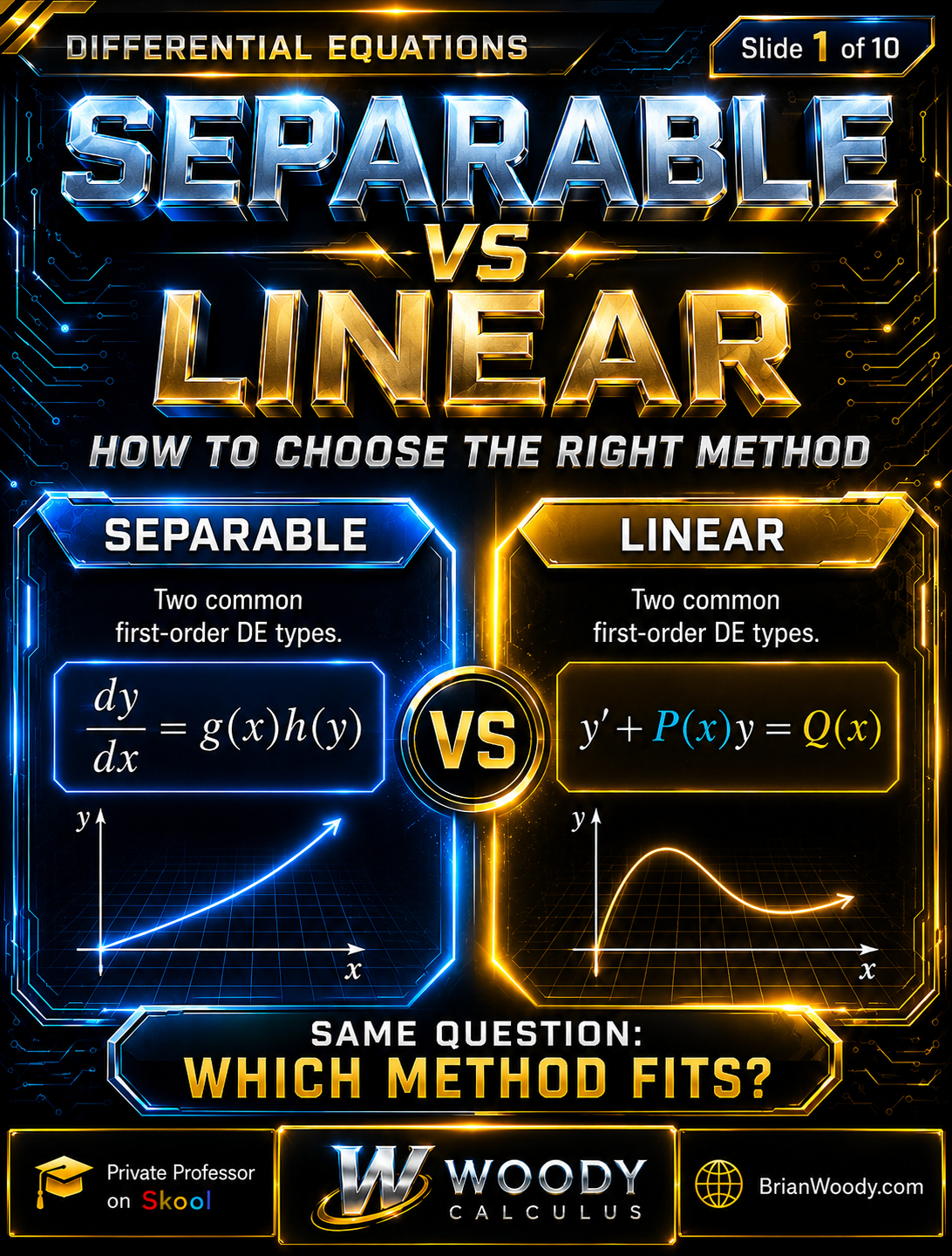
How do you decide whether to use separation of variables or an integrating factor? This Woody Calculus lesson explains how to classify separable and first-order linear differential equations, solve each type step by step, handle equations that fit both methods, and verify the final solution.
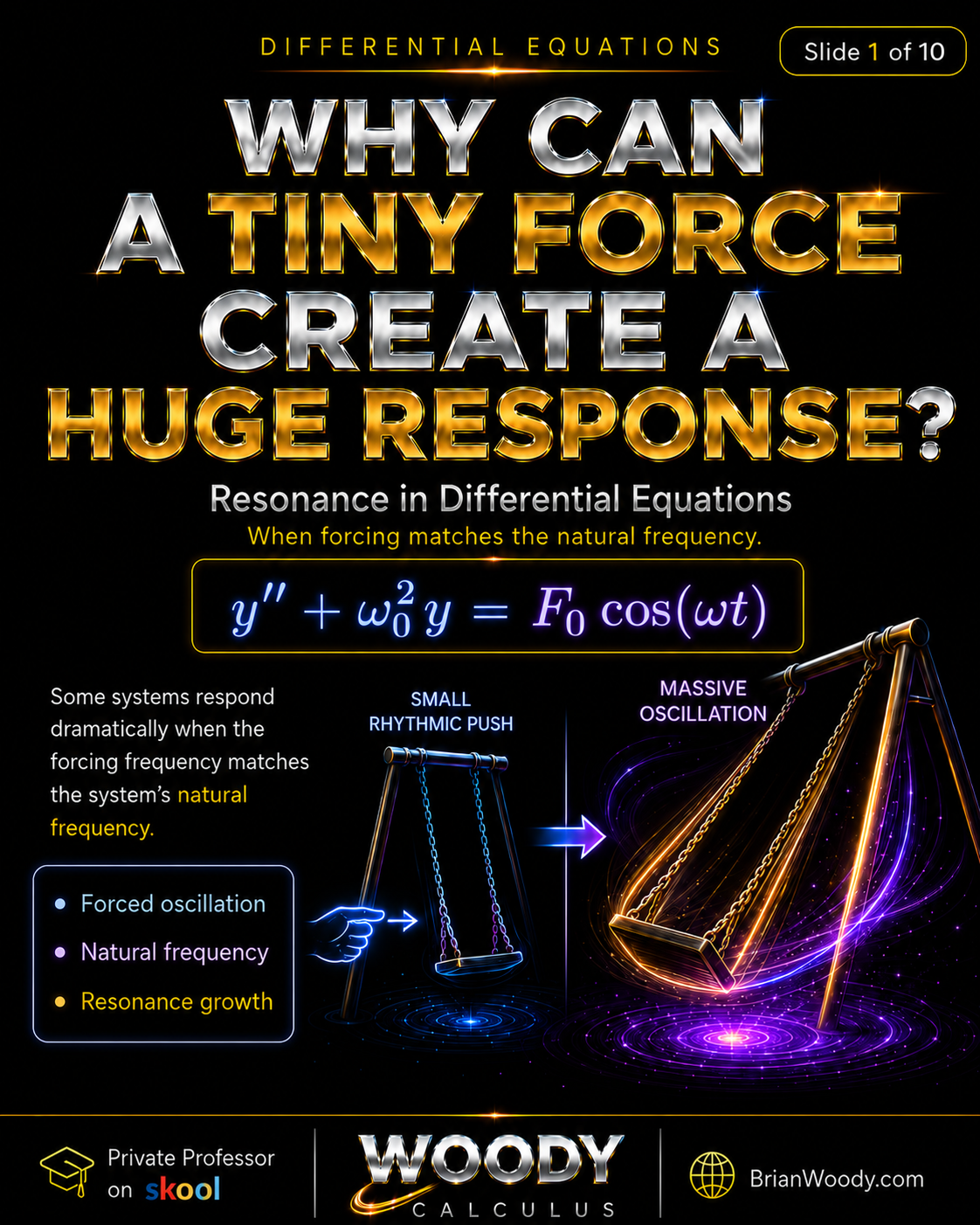
Resonance happens when a forcing frequency matches a system’s natural frequency. This Woody Calculus Differential Equations lesson explains forced oscillations, natural frequency, undamped resonance growth, damping, peak response, and real-world applications.
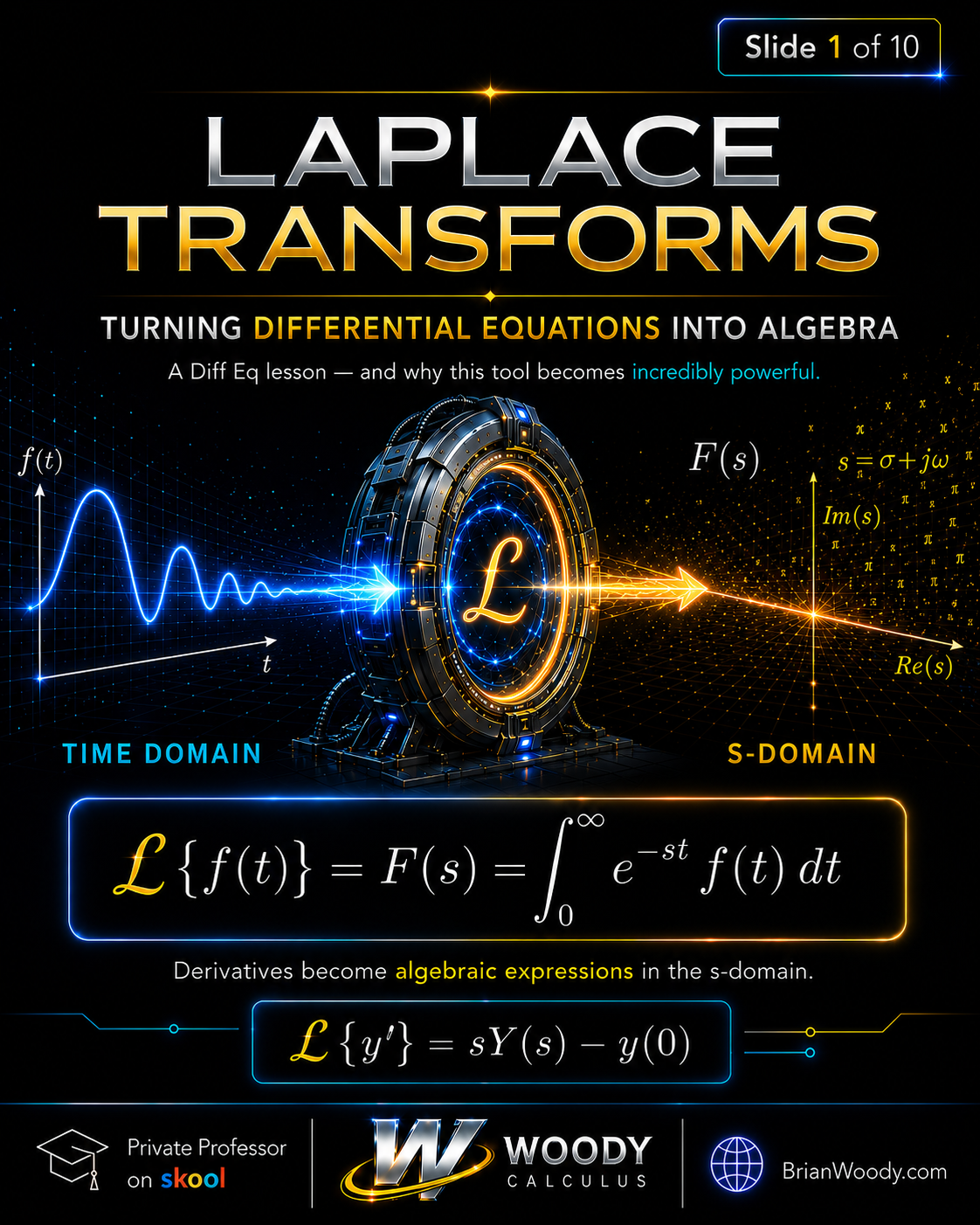
The Laplace Transform turns differential equations into algebra by moving time-domain functions into the s-domain. In this Woody Calculus visual lesson, learn the core formula, derivative rules, initial value problems, partial fractions, inverse Laplace transforms, unit step functions, and why Laplace transforms are so powerful for Differential Equations, engineering, circuits, and applied mathematics.
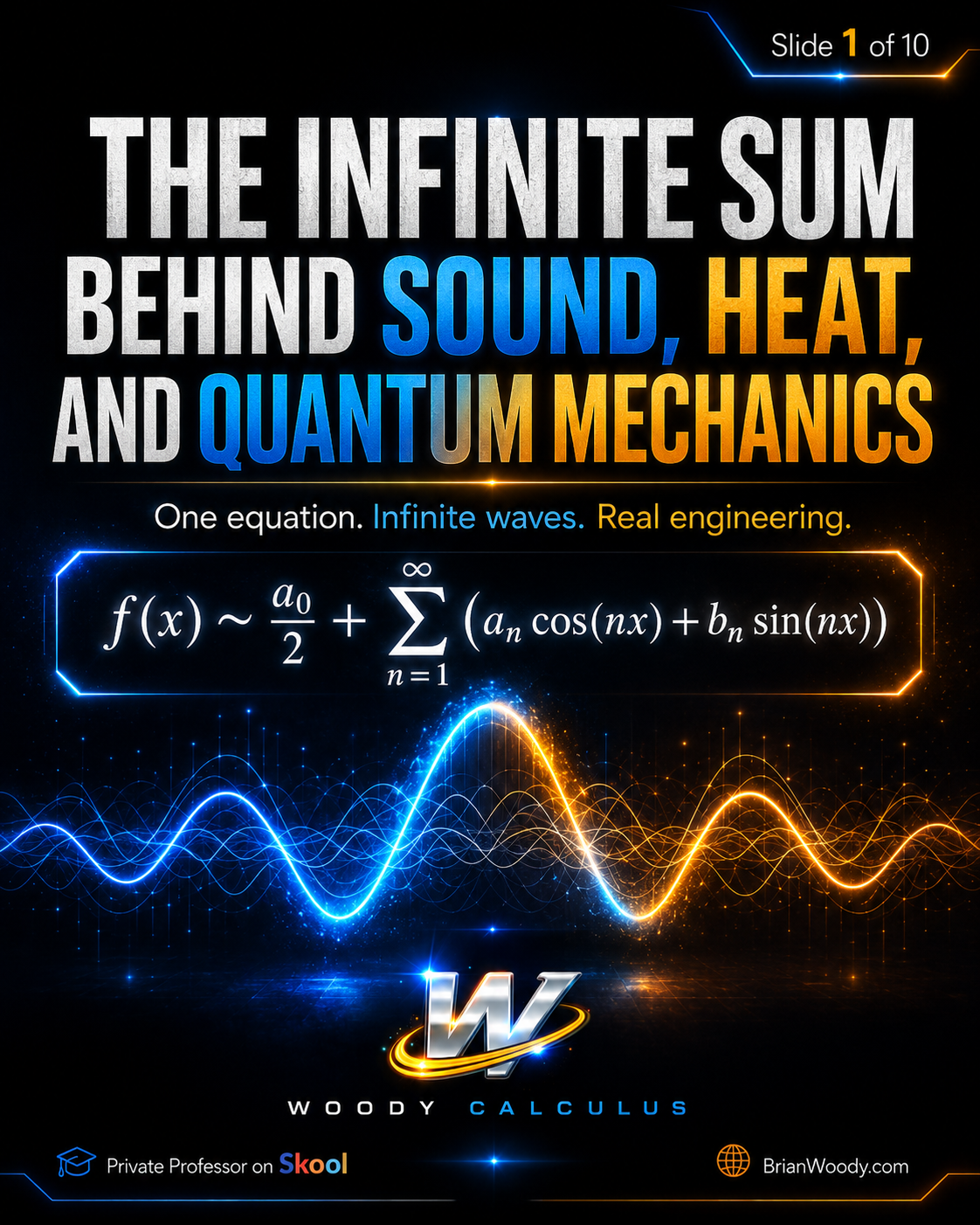
Fourier series reveal how complex periodic signals can be rebuilt from simple sine and cosine waves. Learn how harmonics, Fourier coefficients, orthogonality, partial sums, and frequency-domain thinking connect to sound, heat flow, PDEs, engineering, and quantum mechanics.
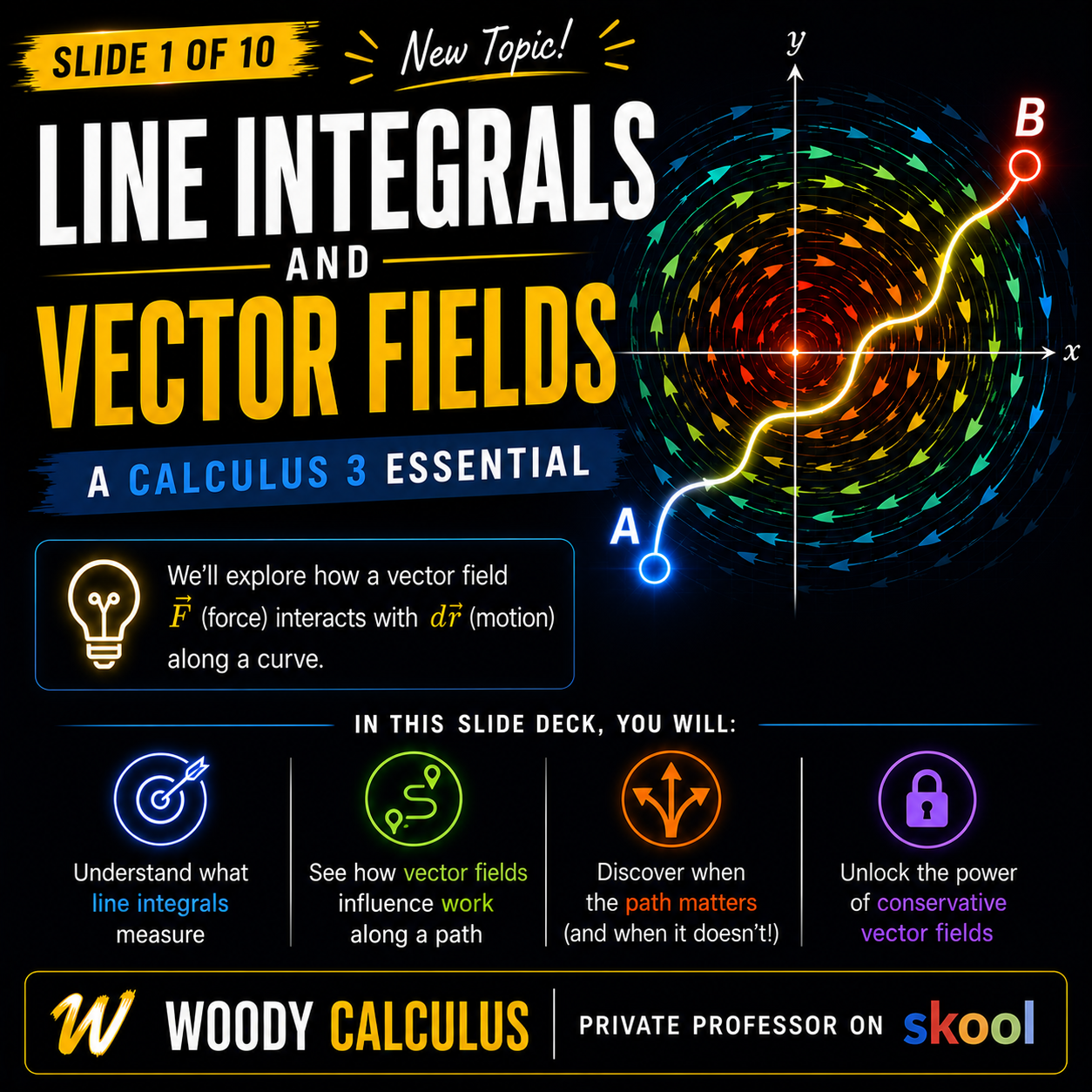
Line integrals are one of the core ideas in Calculus 3 and vector calculus. Learn what line integrals measure, how vector fields interact with paths, why direction matters, and when different paths from the same start to the same end can produce different work.
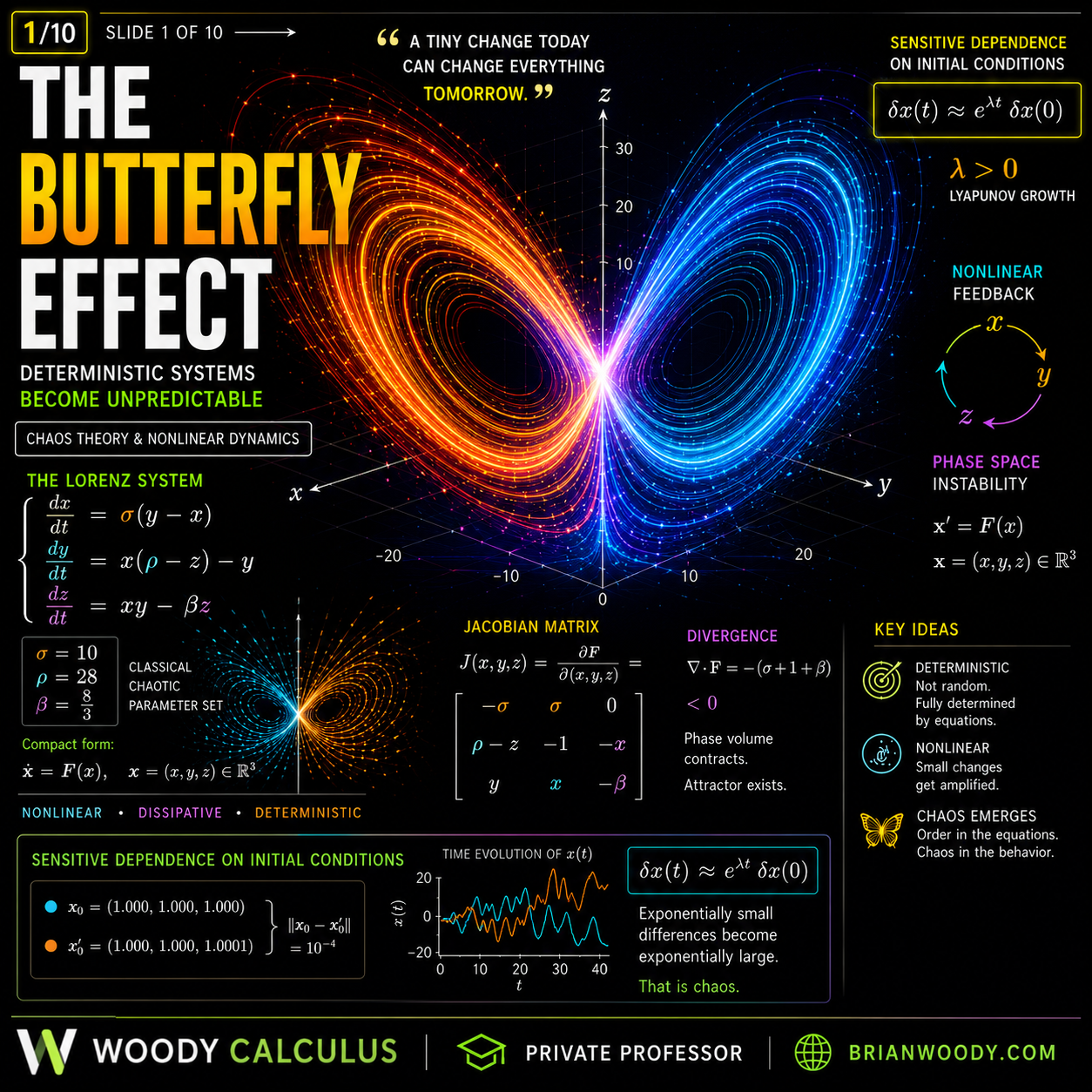
Chaos Theory explained through the Butterfly Effect, Lorenz System, Lyapunov Exponents, Strange Attractors, and nonlinear dynamics. Learn why deterministic equations can still produce unpredictable behavior.