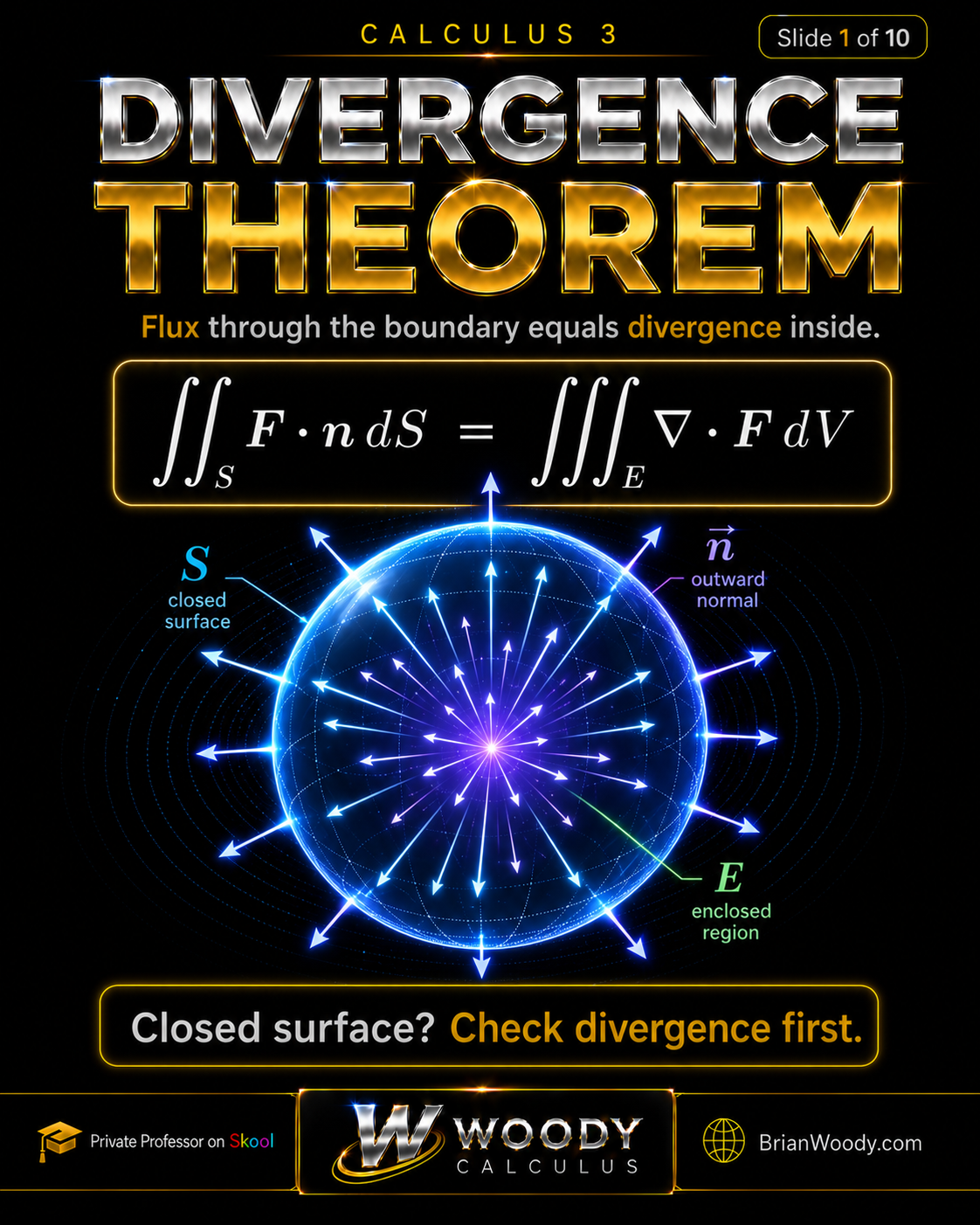
The Divergence Theorem converts outward flux through a closed surface into a triple integral of divergence over the enclosed solid. Learn the theorem’s conditions, flux and divergence meanings, method-selection rules, singularity warnings, and a complete sphere example with exact verification.
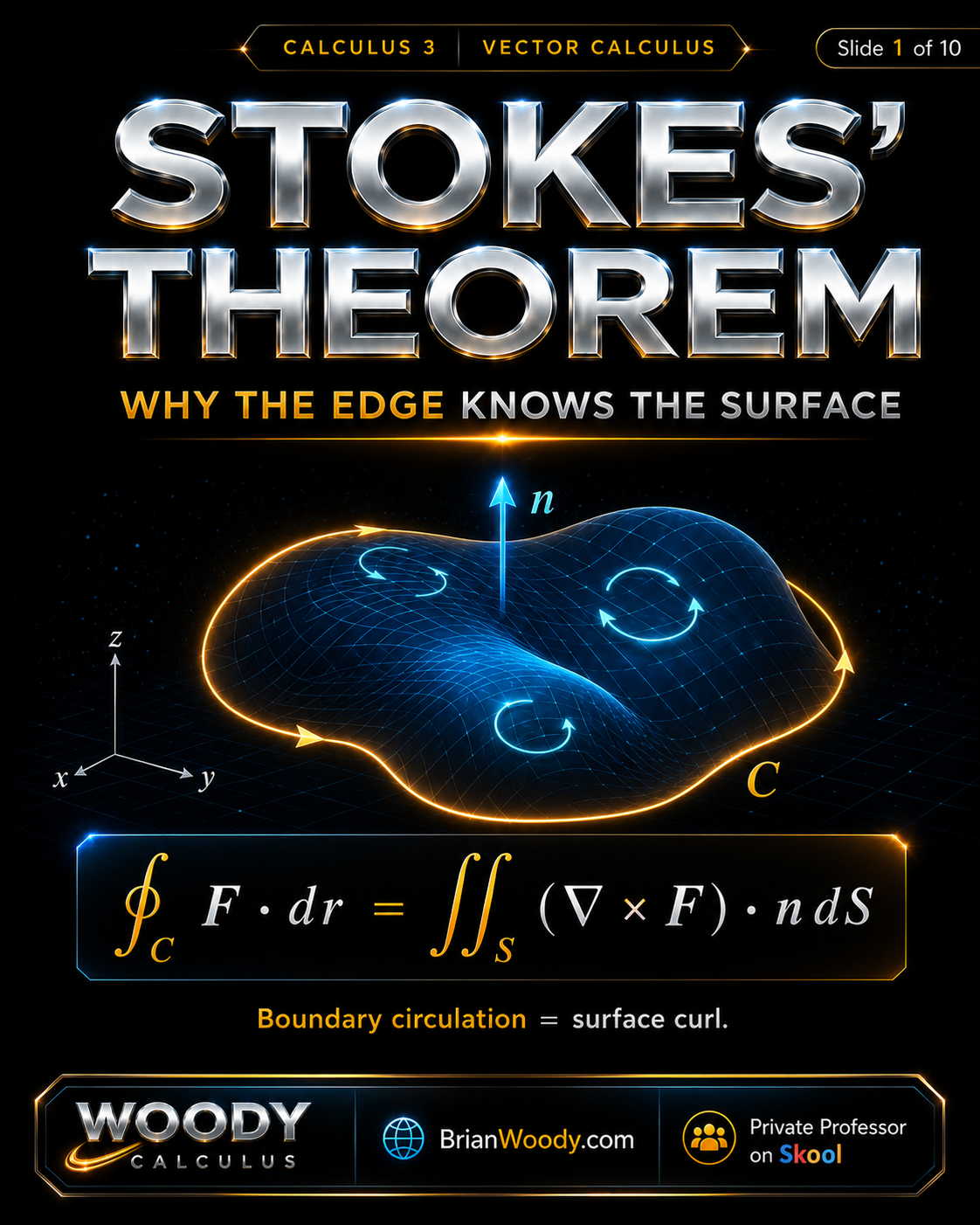
Stokes’ Theorem says that boundary circulation equals the total curl through a surface. In this Woody Calculus visual lesson, learn how Stokes’ Theorem connects line integrals, surface integrals, curl, orientation, the right-hand rule, Green’s Theorem, and vector calculus in Calculus 3.
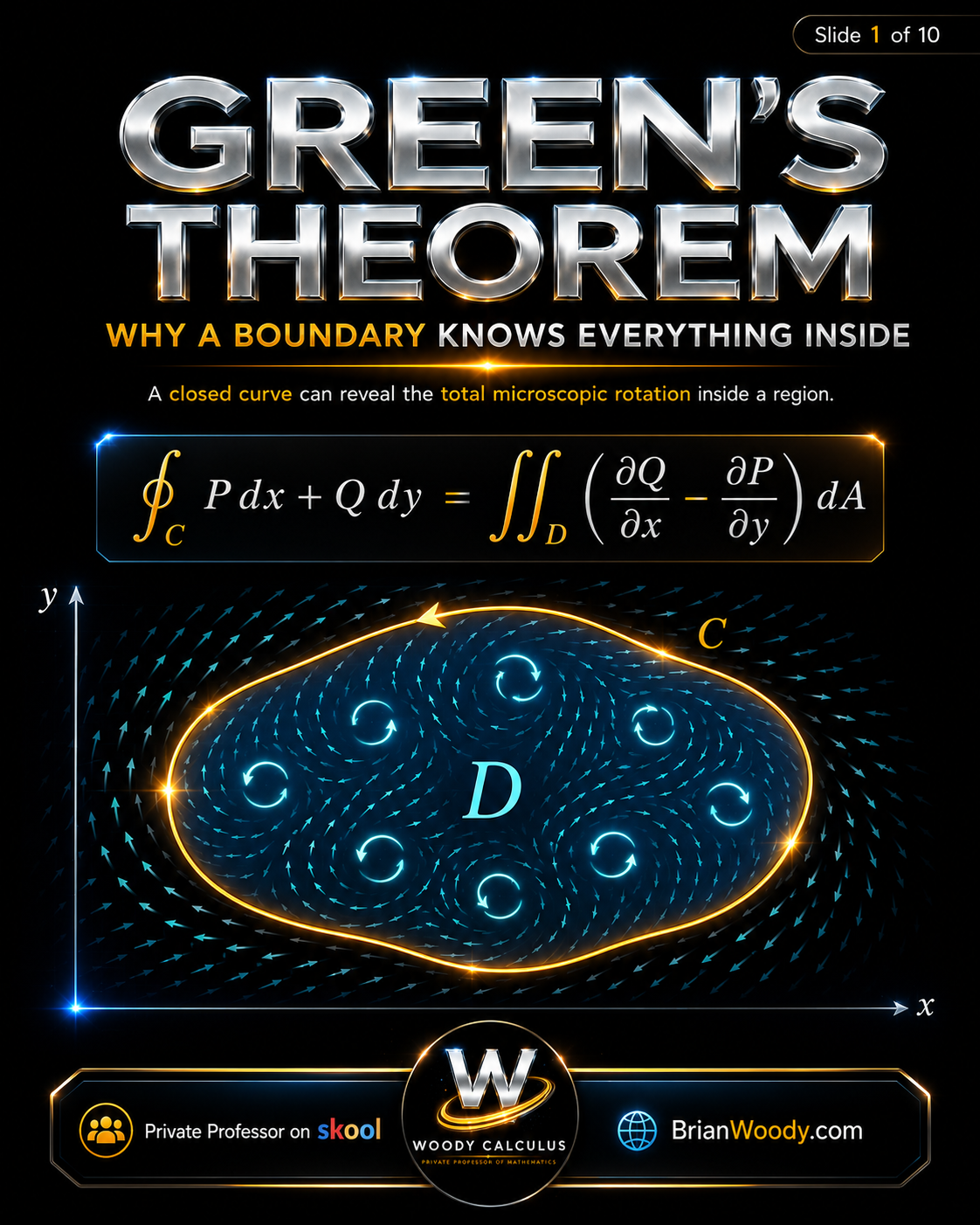
Green’s Theorem turns a boundary line integral into an interior double integral. In this Woody Calculus visual lesson, learn how Green’s Theorem connects circulation, curl, flux, area, line integrals, double integrals, Stokes’ Theorem, and the Divergence Theorem in Calculus 3.
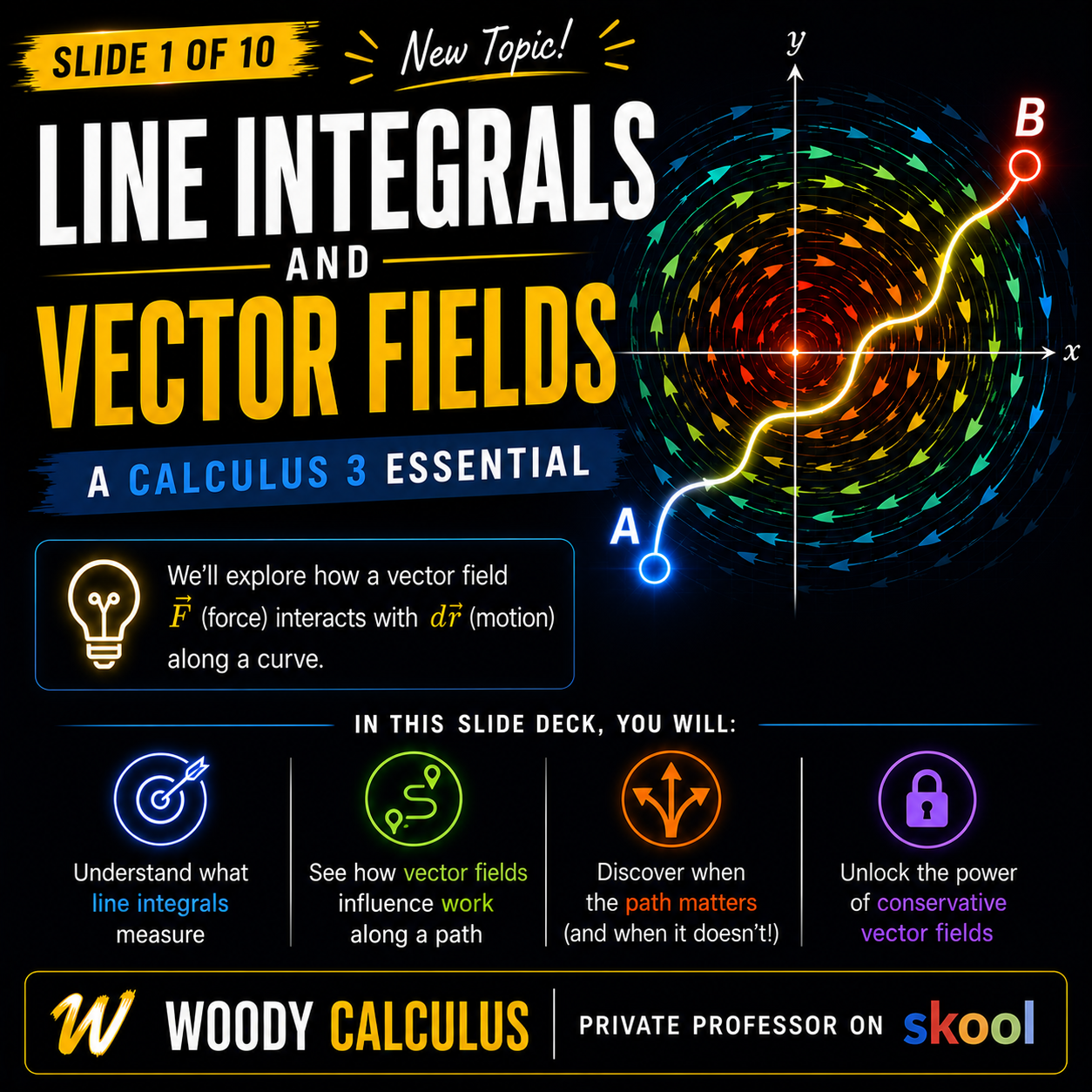
Line integrals are one of the core ideas in Calculus 3 and vector calculus. Learn what line integrals measure, how vector fields interact with paths, why direction matters, and when different paths from the same start to the same end can produce different work.
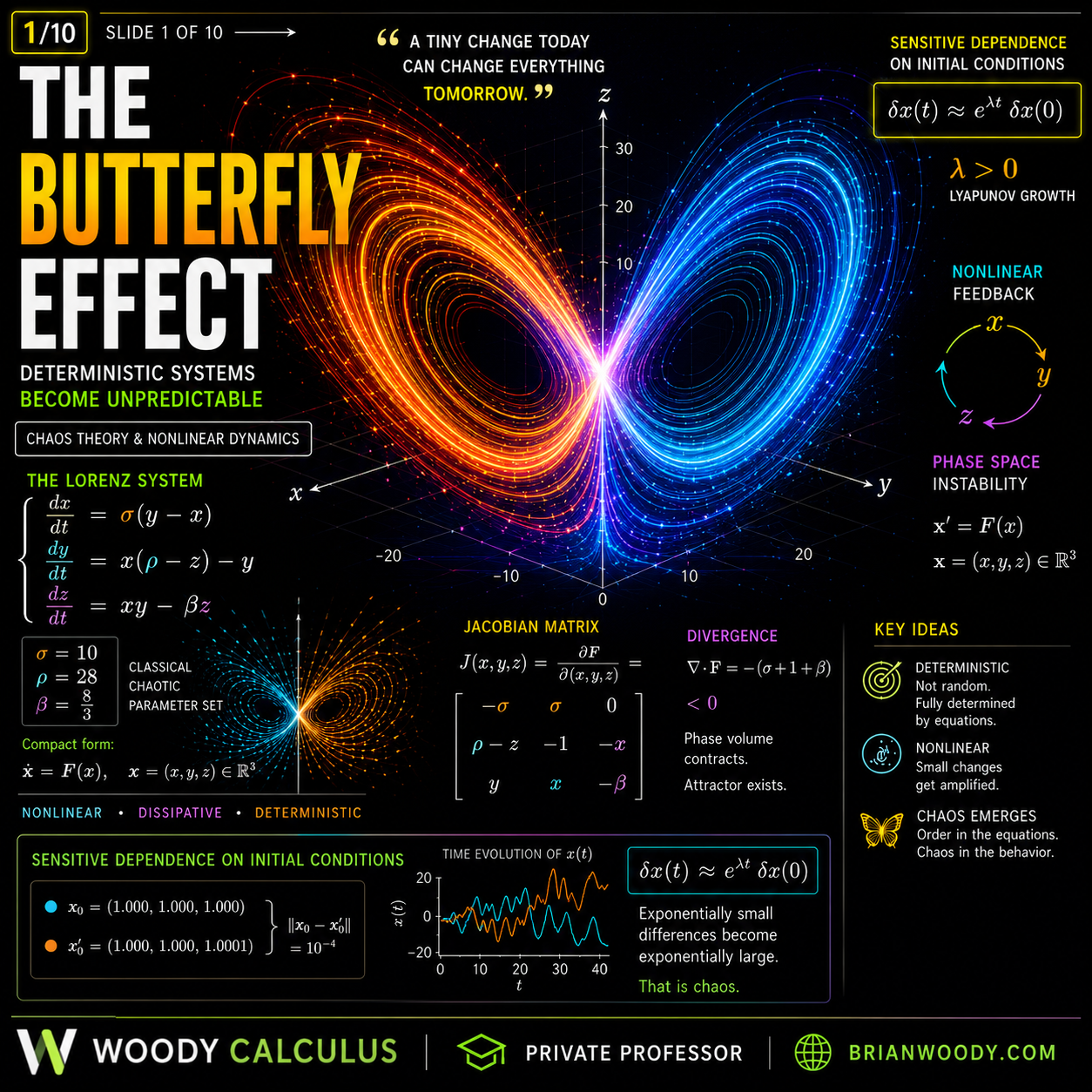
Chaos Theory explained through the Butterfly Effect, Lorenz System, Lyapunov Exponents, Strange Attractors, and nonlinear dynamics. Learn why deterministic equations can still produce unpredictable behavior.