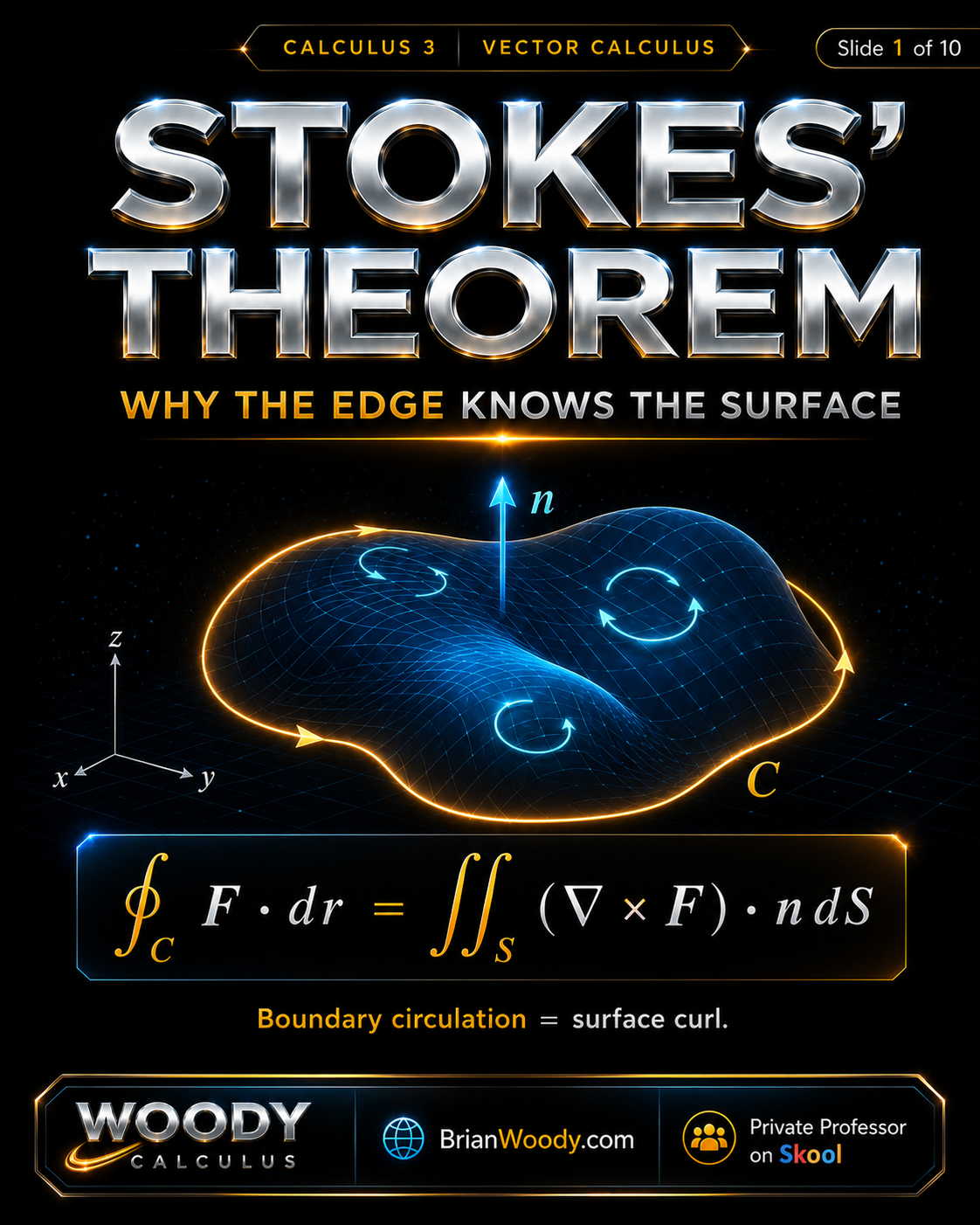
Stokes’ Theorem says that boundary circulation equals the total curl through a surface. In this Woody Calculus visual lesson, learn how Stokes’ Theorem connects line integrals, surface integrals, curl, orientation, the right-hand rule, Green’s Theorem, and vector calculus in Calculus 3.
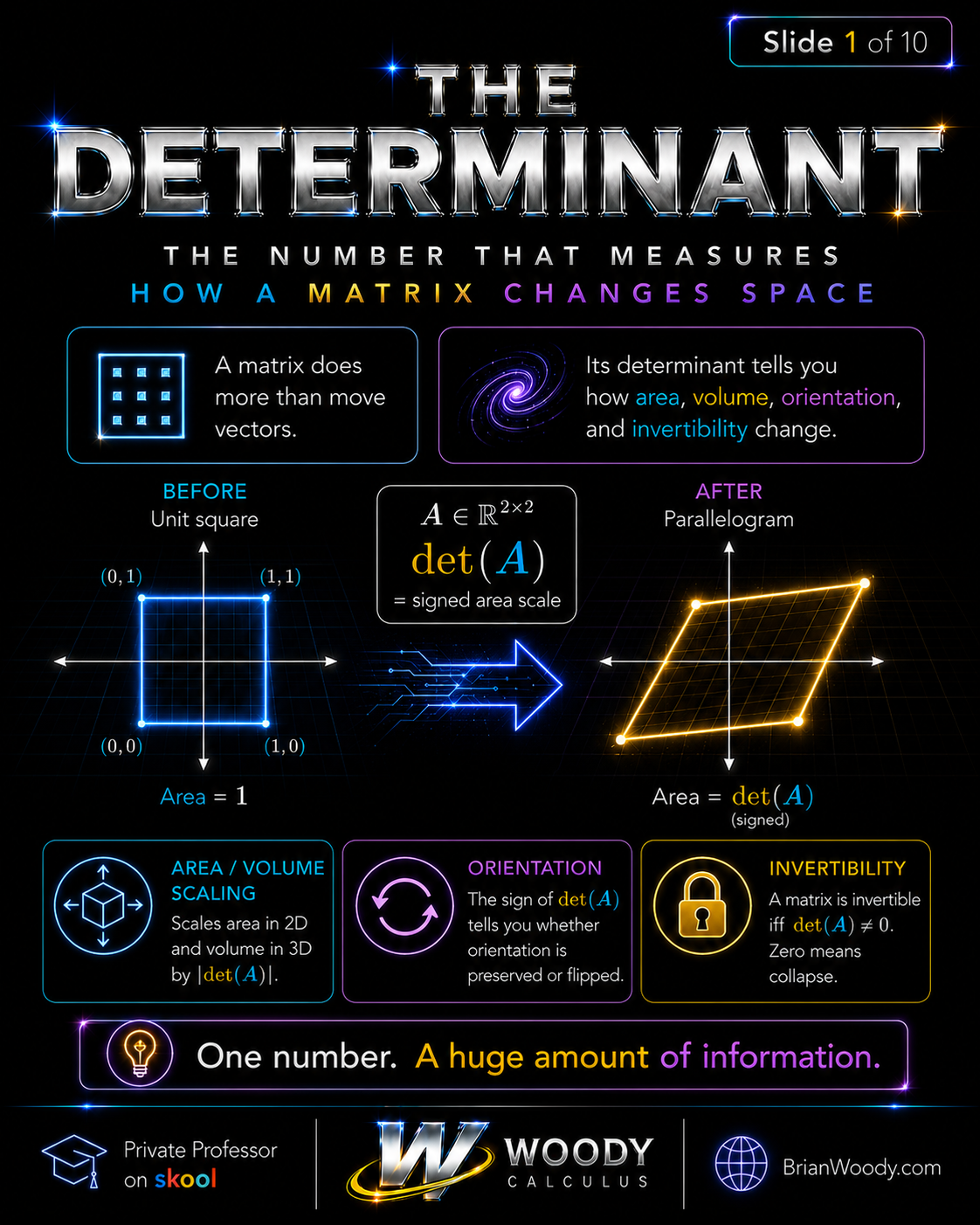
The determinant is the number that measures how a matrix changes space. In this Woody Calculus visual lesson, learn how determinants explain area and volume scaling, orientation, invertibility, matrix collapse, eigenvalues, Wronskians, and why det(A) connects Linear Algebra to Differential Equations.
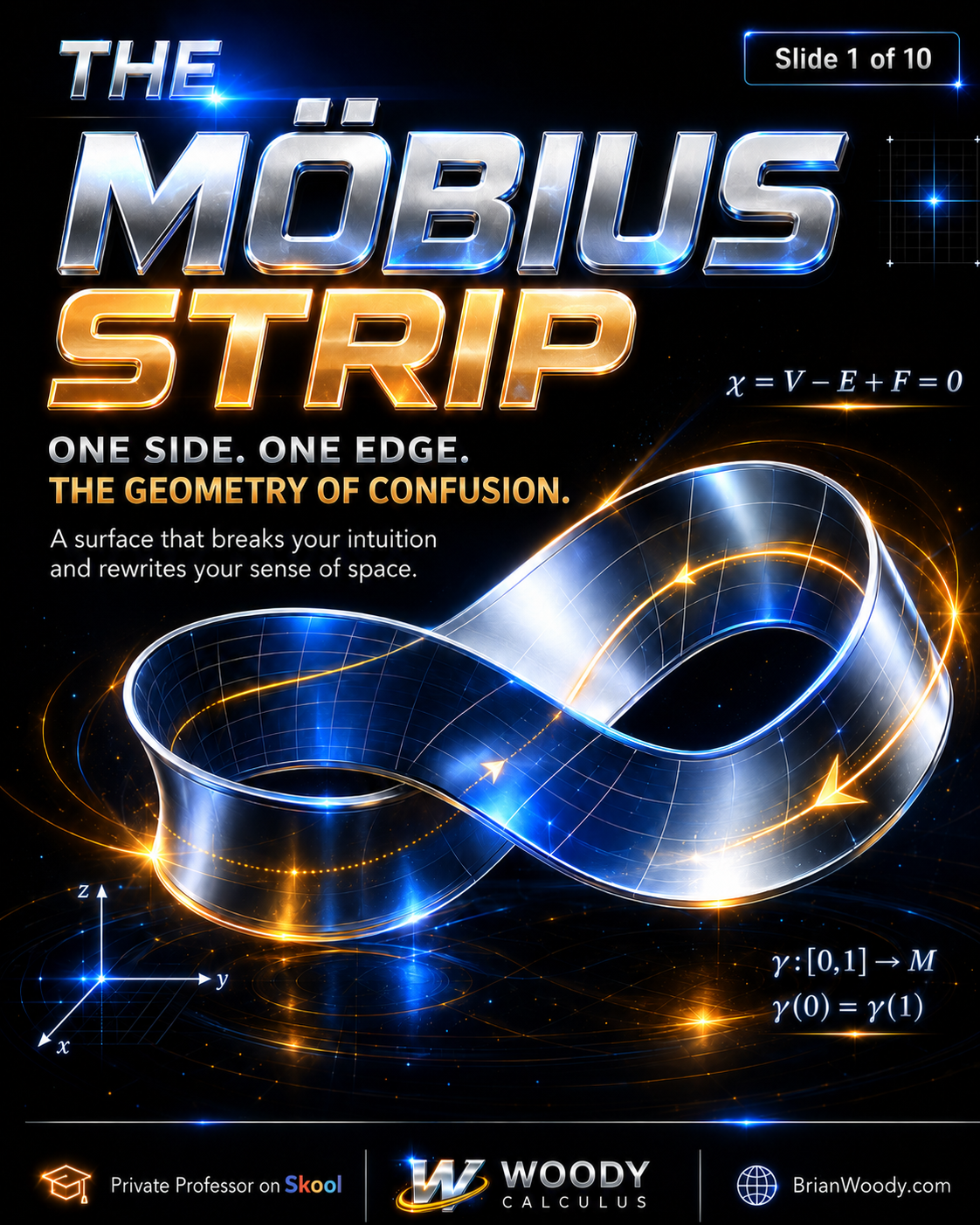
The Möbius strip is one of the clearest examples of why orientation matters in Calculus 3, vector calculus, topology, and surface integrals. Learn how one half-twist creates a one-sided surface with one boundary edge, no global normal vector, and a powerful obstruction to the standard global form of Stokes’ Theorem.