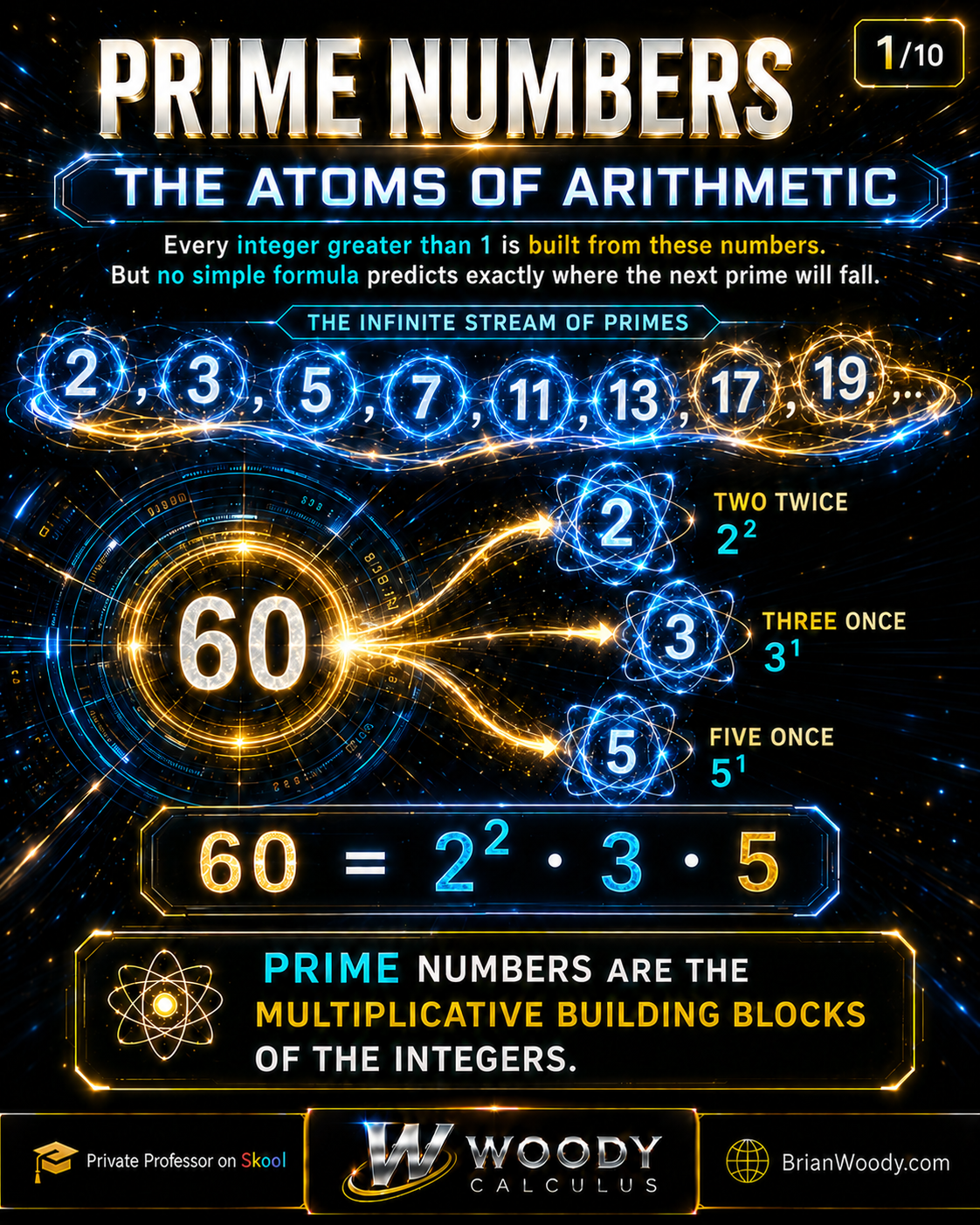
Prime numbers are the multiplicative building blocks of the integers. In this Woody Calculus lesson, learn the formal definition of a prime, why 1 is excluded, the Fundamental Theorem of Arithmetic, Euclid’s proof of infinitely many primes, the Sieve of Eratosthenes, prime patterns modulo 6, the Prime Number Theorem, modern cryptography, and the deep connection between primes and the Riemann Hypothesis.
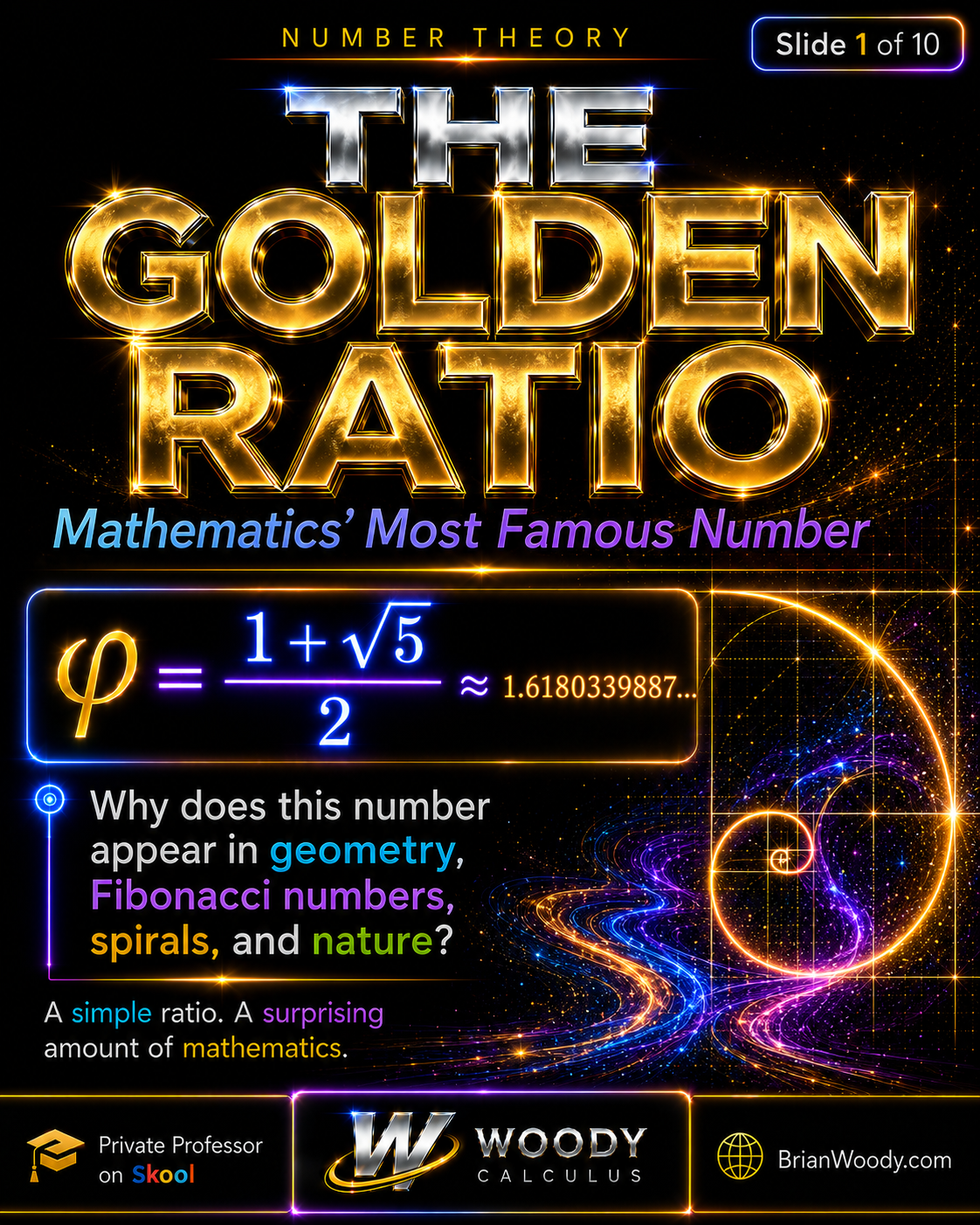
The golden ratio φ=(1+√5)/2 is where geometry, algebra, Fibonacci numbers, limits, continued fractions, pentagons, spirals, and phyllotaxis meet. This complete Woody Calculus visual lesson derives phi, proves the Fibonacci limit, distinguishes a true golden spiral from Fibonacci-style arcs, and separates real mathematics from popular mythology.
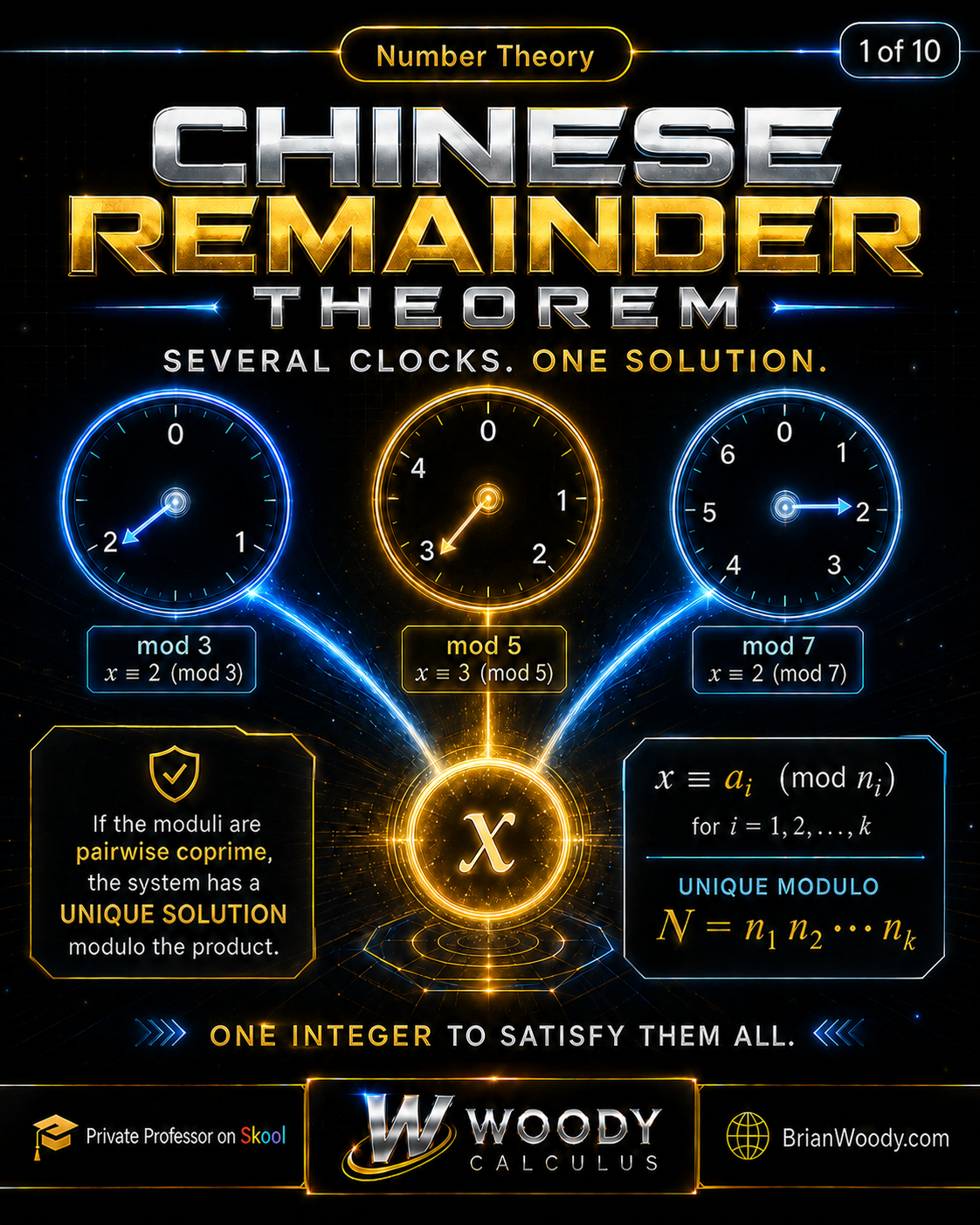
The Chinese Remainder Theorem combines simultaneous congruences into one residue class. Learn the modular-inverse algorithm, two complete examples, proof, verification, noncoprime cases, common mistakes, and exam-ready method selection.
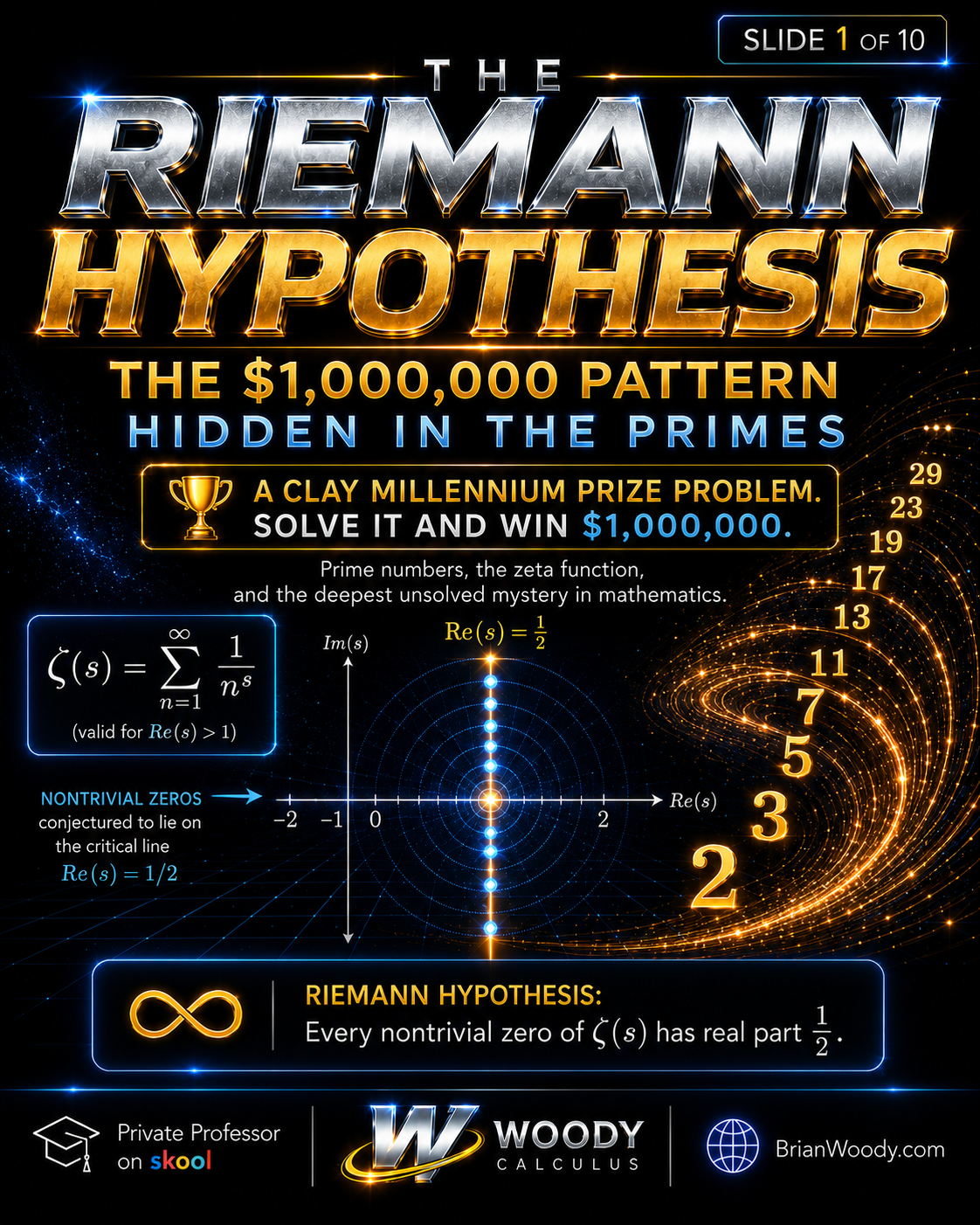
The Riemann Hypothesis is one of the deepest unsolved problems in mathematics. It connects prime numbers, the zeta function, complex analysis, randomness, and hidden order — with a $1,000,000 Clay Mathematics Institute prize for a proof.
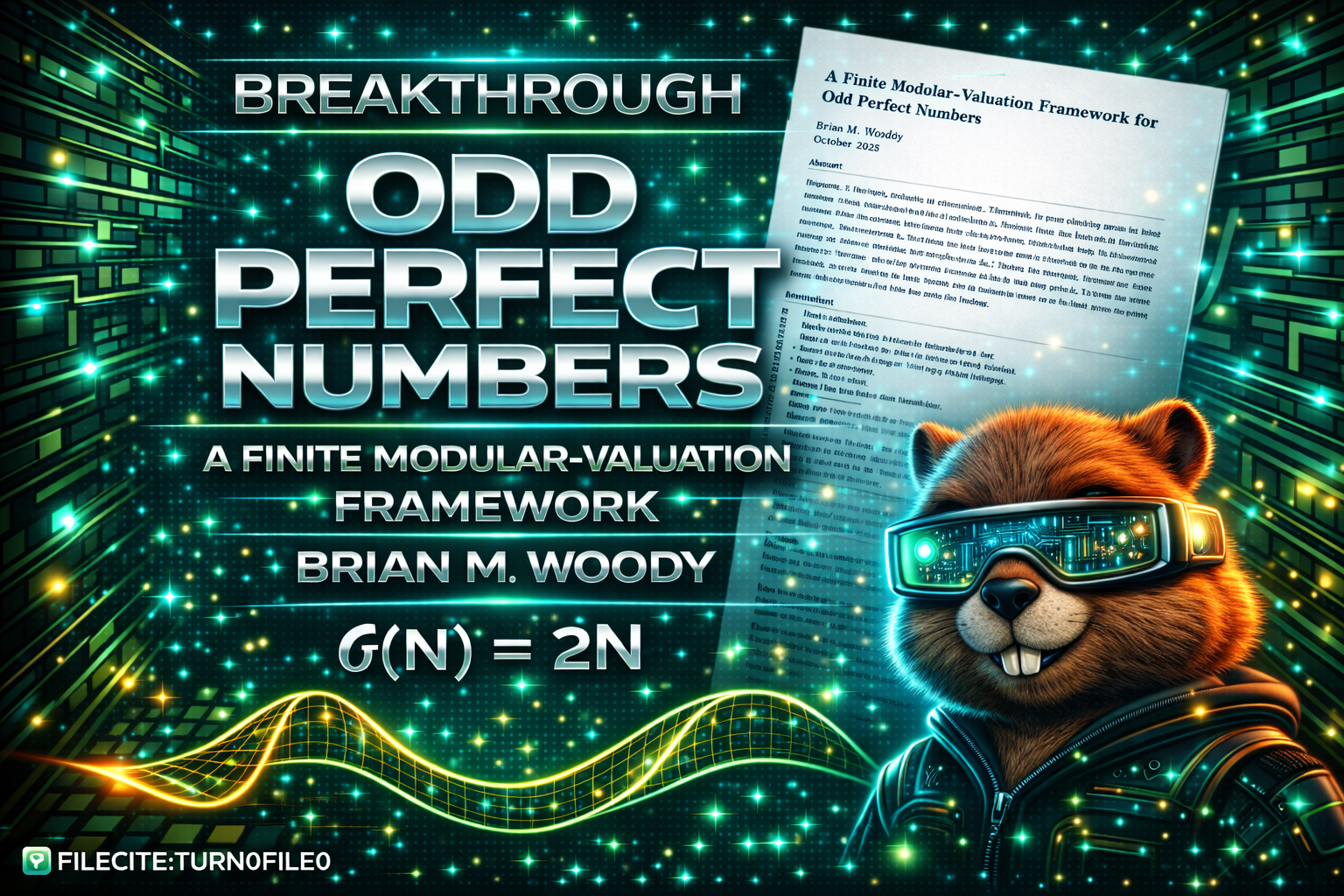
Woody Calculus presents a number theory paper on odd perfect numbers, modular valuations, Euler’s form, the abundancy index, and Zsigmondy’s theorem, developing a finite framework for analyzing the structure of hypothetical odd perfect numbers.
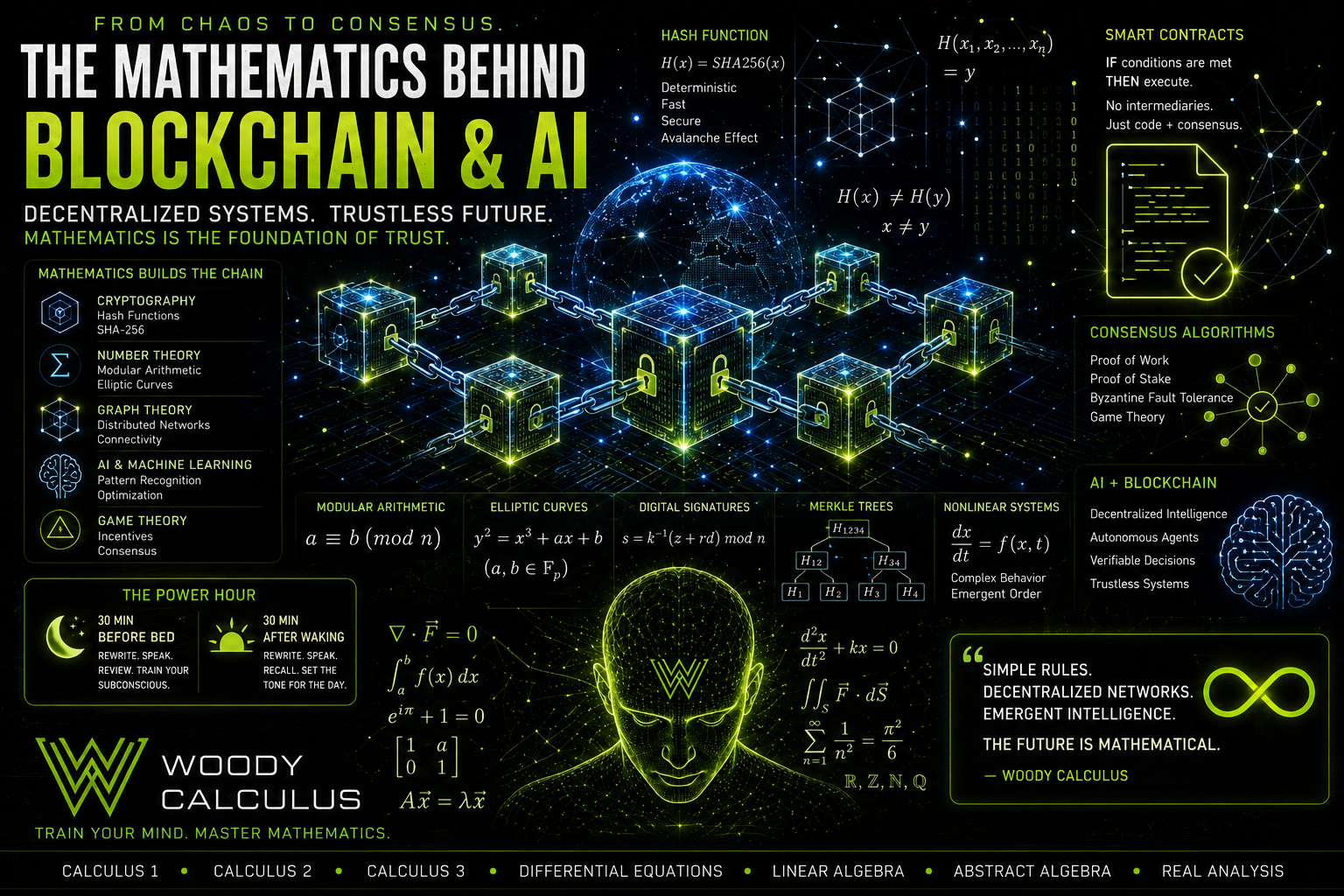
Blockchain is not merely a cryptocurrency technology. It is a system for creating verifiable agreement with mathematics, cryptography, computation, and…